The best chess courses do one thing better than random videos: they give the player a path. A good course tells a beginner what to learn first, gives an improving player enough practice to stop repeating the same mistakes, and helps advanced players focus on openings, calculation, endgames, or tournament preparation without drowning in disconnected advice.
Today, online chess courses range from free interactive lessons and tactics trainers to grandmaster-led subscription programs, marketplace courses, and personalized analytics tools. The “best” choice is not the same for every player. A 700-rated beginner, a 1400 rapid player, a parent teaching a child, and a tournament player preparing a repertoire all need different kinds of structure.
Below is a practical guide to the best online chess lessons, who they fit, and how to choose the best online chess course for your level.
Quick Picks: Best Online Chess Courses by Player Type
| Player type | Best fit | Why it works |
|---|---|---|
| Complete beginner | Lichess Learn / beginner marketplace course | Low barrier, simple rules, easy exercises |
| 800–1200 rating | Chessable basics + tactics course | Structured repetition and pattern building |
| 1000–1600 rating | ChessMood or Chessable repertoire/course path | Openings, middlegames, endgames in sequence |
| Data-driven improver | Aimchess | Personalized lessons based on your games |
| Chess teacher / educator | FIDE EDU courses | Designed for chess education and teaching |
| Player who wants flexible paid classes | Udemy / Class Central course listings | Broad marketplace with many course styles |
Class Central currently lists hundreds of chess-related courses and certifications, which shows how broad the online chess learning market has become. The problem is not finding chess courses. The problem is choosing one that matches your current level and training habits.
What Makes a Chess Course Better Than YouTube?
YouTube is great for inspiration. A strong course is better for improvement.
The difference is structure. A course should tell you what to study first, what to repeat, when to solve exercises, and how each new concept connects to real games. Without that sequence, a beginner can watch three hours of opening traps and still hang a piece on move seven.
A good course usually includes:
-
theory explained in a clear order;
-
practice positions after each idea;
-
tactical exercises;
-
annotated games;
-
review tasks;
-
progress tracking or repetition;
-
homework-style positions to revisit later.
This is why the best chess course is not always the one with the famous title or the strongest grandmaster. It is the one that gets a player to practice consistently.
Related article: Chess Tactics for Beginners – Learn Basic Patterns and Strategies is a useful companion if your course does not include enough tactical pattern work.
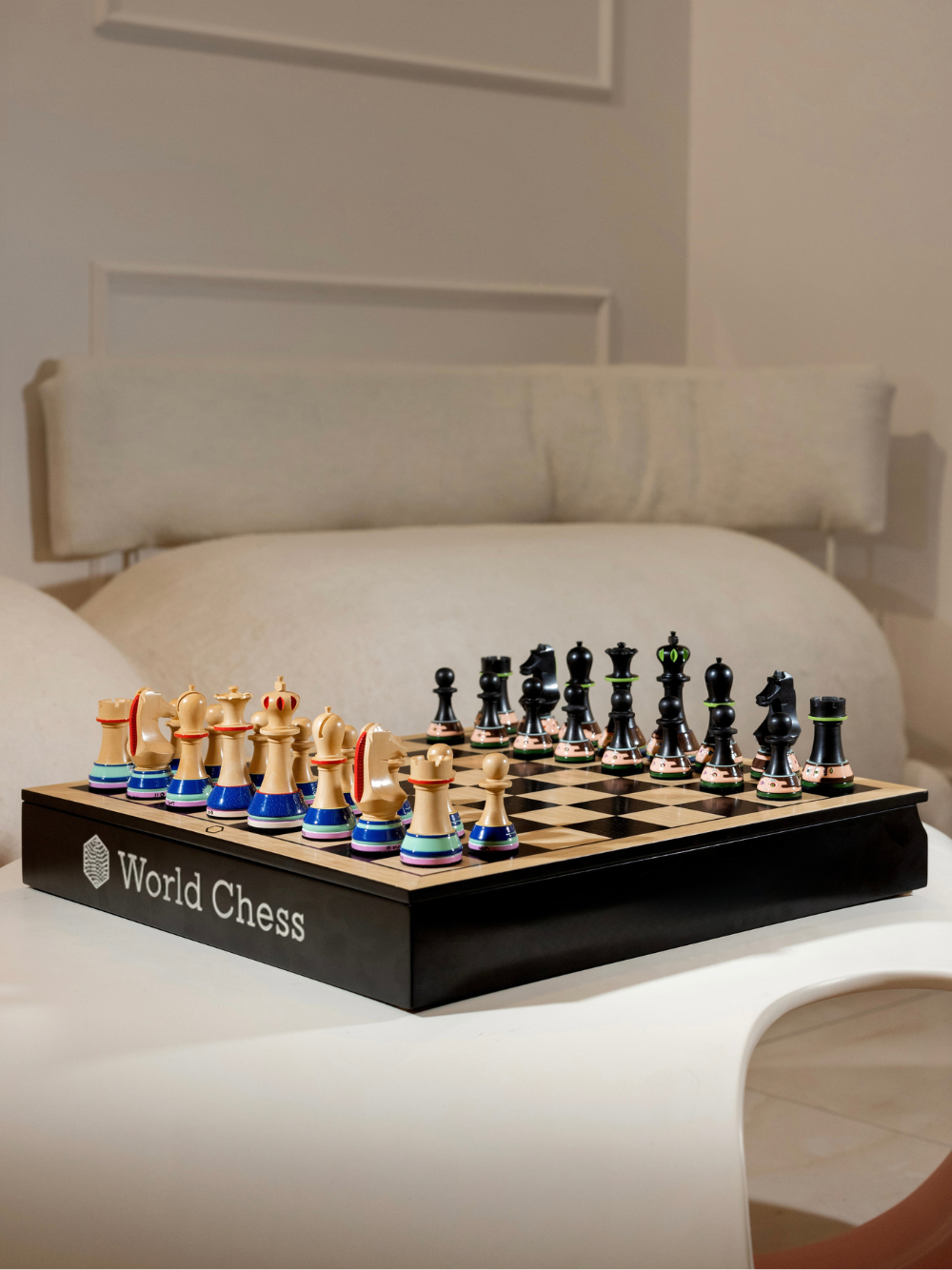
A physical board also helps turn passive watching into active recall: set up positions from your course, make the moves by hand, and explain the idea before checking the answer. For this kind of daily study routine, a compact and stable setup like the Official World Chess Studio Set works well because it includes Studio-sized pieces and a folding wooden board in one practical package.
Best Online Chess Courses and Training Programs
1. Chessable — Best for Repetition, Openings, and Structured Memory
Chessable is one of the strongest platforms for players who want interactive, repeatable study. Its MoveTrainer system turns chess books and videos into interactive courses, and the platform uses spaced repetition to schedule reviews over time.
This makes Chessable especially useful for:
Chessable is not just for advanced players. It has free courses and paid material across different levels, and its catalog can be filtered by price and difficulty.
Best for: beginners who need repetition, club players building a repertoire, and 1000–1800 players who forget lines after watching videos once.
Watch out for: course overload. One opening course studied properly is worth more than five unfinished repertoires.
2. ChessMood — Best Grandmaster-Led Training Program
ChessMood is built around grandmaster-created courses, study plans, and training paths. Its course library covers openings, middlegames, tactics, and endgames, and the platform says it has 500+ hours of step-by-step courses by grandmasters.
It is a good fit for players who want a more guided program rather than a marketplace of unrelated courses. ChessMood also positions its material as suitable for players from roughly 1000 to 2700 online rating, which makes it broad enough for improving club players and serious competitors.
Best for: 1000–2000 players who want a serious training system with openings, middlegame plans, and endgame improvement.
Watch out for: time commitment. A large library is only useful if you follow a study plan and review regularly.
3. Aimchess — Best for Personalized Training from Your Own Games
Aimchess is not a traditional video-course platform. It analyzes a player’s games and creates personalized lessons and training tasks based on their strengths and weaknesses.
This is useful because many players do not know what they should study. They think they need openings, but their games may show missed tactics, poor conversion, weak time management, or frequent blunders in equal positions.
Aimchess has a free standard tier and a paid premium tier; its current pricing page lists Premium at $7.99 monthly and an annual option billed at $57.99. Since prices can change, users should always check the current pricing before subscribing.
Best for: online players who already play regular games and want training based on real mistakes.
Watch out for: it works best when you have enough recent games to analyze.
4. Lichess Learn and Practice — Best Free Foundation
Lichess is one of the best free starting points for absolute beginners. Its Learn and Practice sections cover basic piece movement, common checkmating patterns, key positions, puzzles, and tactical skill-building.
This is not a “course” in the premium sense, but it can function like a beginner curriculum if used in order:
-
Learn how the pieces move.
-
Practice checkmates.
-
Solve basic tactics.
-
Play short games.
-
Review mistakes.
-
Repeat.
Lichess also describes itself as a free, open-source, no-ads chess server, which makes it a low-friction place to practice after lessons.
Best for: complete beginners, younger players, casual learners, and anyone who wants free practice before paying for a course.
Watch out for: self-direction. You may need your own study schedule.
5. Udemy and Course Marketplaces — Best for Budget-Friendly Class Formats
Udemy’s chess topic page lists many chess courses across basic strategy, tactics, openings, and other training themes. Marketplace courses can be useful because they are often affordable, beginner-friendly, and built around familiar video lesson formats.
Class Central can also help compare courses from different providers. Its chess subject page lists a large course catalog, and its “best chess courses” guide is useful for scanning options before deciding what style you prefer.
Best for: beginners who like video lessons, casual adult learners, and players who want a one-time purchase rather than a subscription.
Watch out for: quality varies. Check lesson structure, instructor background, update date, exercises, and reviews before buying.
6. FIDE EDU — Best for Teachers and Chess Educators
FIDE EDU is not the first stop for a beginner who just wants to stop blundering pieces. It is more relevant for teachers, chess educators, and people who want a formal framework for teaching chess. FIDE’s Chess in Education materials include online and in-person teacher-focused courses, and FIDE’s public course announcements describe these programs as training for teachers, chess educators, and players with basic chess knowledge.
FIDE sources also show that some official education courses have specific fees, such as €75 or €100 depending on the course and year, so this is a more specialized path than general player improvement.
Best for: coaches, school instructors, chess educators, and organizers.
Watch out for: this is not usually the most direct route for a casual player trying to improve their rating.
Best Chess Class vs. Self-Paced Course: Which Should You Choose?
The phrase Best Chess Class usually implies live instruction. That can mean a private coach, a group class, a school program, or a live online session. A self-paced course is different: you watch, solve, repeat, and manage your own progress.
Choose a class if:
-
you need accountability;
-
you keep making the same mistakes but cannot diagnose them;
-
you want feedback on your games;
-
you are preparing for a tournament;
-
you learn better by asking questions.
Choose a course if:
-
you want a lower-cost structure;
-
you prefer studying on your own schedule;
-
you need repetition;
-
you want to focus on a specific topic;
-
you are still building basic habits.
For many improving players, the best setup is hybrid: one course for structure, one coach session every few weeks for feedback, and regular games for testing ideas.
A clock can make course practice feel much closer to tournament play: after learning a new opening or endgame idea, play several training games with realistic time pressure. For that purpose, the DGT 3000 Digital Chess Clock is a practical training upgrade because it has a large display, many preset time controls, and compatibility with DGT electronic boards.

Online Chess Courses by Rating Level
Complete Beginners: 0–800
Beginners should not start with deep opening theory. They should learn rules, checkmates, tactics, development, king safety, and basic endgames. The best beginner course is one that gets the player playing real games quickly without creating bad habits.
Look for:
-
piece movement;
-
check, checkmate, stalemate;
-
legal moves and castling;
-
basic opening principles;
-
simple tactics;
-
king and queen mate;
-
king and rook mate;
-
how to review a game.
A good beginner routine is 30–45 minutes per day:
| Time | Task |
|---|---|
| 10 min | Review one lesson |
| 15 min | Solve tactics |
| 15 min | Play one rapid game |
| 5 min | Write down one mistake |
Related article: How to Set Up a Chess Set: Easy Guide for Beginners is useful for readers who are starting from the board itself.
For beginners, physical clarity matters: readable pieces and a stable board make lessons less abstract and reduce setup friction. If a student wants a simple first setup, the Chess Set with Foldable Chessboard Navy Blue is beginner-friendly in silhouette, and practical for casual training sessions.

Improving Players: 800–1600
This is where Chess Courses Online become especially valuable. Players know the rules, but they lose because of recurring patterns:
The Best Online Chess Courses for this level usually include structured tactics, annotated model games, and simple opening repertoires. The goal is not to memorize everything. The goal is to stop losing games the same way.
A good weekly plan:
| Day | Focus |
|---|---|
| Monday | Tactics theme: forks and pins |
| Tuesday | Opening principles + one model game |
| Wednesday | Endgame basics |
| Thursday | Play two rapid games |
| Friday | Analyze one loss |
| Saturday | Course review |
| Sunday | Longer game on a physical board |
Related article: Beginner Chess Strategy: 15 Winning Strategies That Work fits this level well because it reinforces practical decision-making, not just memorization.
Advanced Club Players: 1600+
Advanced players usually need narrower courses. Instead of “learn chess,” they need specific work:
The Best Chess Training Programs at this level are usually built around a clear diagnosis. If your openings are fine but your rook endings are poor, do not buy another opening course. If your tactics are sharp but you lose strategic positions, look for model-game courses and middlegame plans.
This is also where offline study becomes more important. Playing through annotated games on a real board forces the mind to slow down and visualize. If you already own good pieces, pairing them with the Official Folding Chess Board gives board with 45 mm squares designed for Studio-sized World Chess pieces.

What Should the Best Online Chess Lessons Include?
The Best Online Chess Lessons should not be a lecture dump. They should ask the player to do something.
A strong course should include:
1. Clear Theory
A lesson should explain the concept in simple terms: why a move works, what plan it supports, and what the opponent wants.
2. Practice Positions
The learner should solve positions immediately after the idea is introduced.
3. Model Games
One good annotated game can teach more than ten isolated tips.
4. Game Review
The course should encourage you to analyze your own games, not just admire grandmaster games.
5. Repetition
Chess improvement depends on pattern recognition. You need to see the same tactical and strategic ideas many times.
6. Homework
A course without assignments is entertainment. A course with homework becomes training.
Online Courses vs. Books vs. Apps
Each format has a role.
| Format | Best for | Weakness |
|---|---|---|
| Online course | Structure and guided learning | Can become passive if you only watch |
| Book | Deep understanding and slow study | Requires discipline |
| App | Tactics, repetition, quick practice | Can fragment attention |
| Coach | Personalized feedback | More expensive |
| Real board | Visualization and serious review | Slower setup |
For many players, the best combination is:
-
one course for structure;
-
one tactics tool for repetition;
-
one physical board for review;
-
one notebook or PGN file for mistakes.
If you want your study setup to feel more serious, browse chess boards, chess pieces, and chess books so your course work can move naturally from screen to board.
Why Real-Board Practice Makes Online Courses Work Better
Online learning is convenient, but chess is still a board-vision game. If every lesson happens only on a screen, the player may understand the idea digitally but fail to recognize it over the board.
A simple method:
-
Watch the lesson.
-
Set up the key position on a real board.
-
Guess the next move before playing it.
-
Write down the idea in one sentence.
-
Play one training game using that concept.
-
Review the game and find where the idea appeared.
This method builds transfer: the idea moves from video to hand, from hand to board, and from board to game.
For players who study while commuting or traveling, the World Chess Travel Chess Set is a strong fit because it uses magnetic boxwood piece, maple veneer mini board designed to keep positions steady on the move.

Sample Training Position for a Course Lesson
Use this position as a simple “lesson-to-board” exercise. It is not meant to be hard; it is meant to train forcing-move awareness.
Theme: checks, captures, threats
Task: find the forcing move for White.
FEN:
r1bqkb1r/pppp1ppp/2n2n2/4p3/2B1P3/5N2/PPPP1PPP/RNBQK2R w KQkq - 4 4Short GIF for practice:

The point is not to memorize this as “the line.” The point is to see how a course lesson turns into a repeatable habit: develop, castle, prepare the center, then calculate.
How to Choose the Best Chess Course
Before buying anything, answer these questions:
-
What is your current rating or playing strength?
-
What is your biggest recurring mistake?
-
Do you need a full curriculum or one specific topic?
-
Do you prefer video, exercises, or interactive move input?
-
How much time can you study per week?
-
Will you review games after lessons?
Use this rule:
-
If you are under 800, choose basics and tactics.
-
If you are 800–1600, choose tactics, simple openings, and endgames.
-
If you are 1600+, choose targeted courses based on your game review.
-
If you teach chess, consider education-specific programs like FIDE EDU.
-
If you mostly play online, add personalized analysis like Aimchess.
The Best Online Chess Course is the one you finish, review, and apply in real games.
Common Mistakes When Buying Chess Courses
Buying Too Advanced Too Early
A beginner does not need a 300-line Najdorf course. They need development, king safety, tactics, and simple endings.
Studying Without Playing
You cannot improve only by watching lessons. Every concept must be tested in games.
Switching Courses Too Often
Course-hopping feels productive, but it often means restarting the learning curve every week.
Ignoring Endgames
Endgames are not only for masters. Basic king-and-pawn knowledge wins real beginner and club games.
Never Reviewing Losses
Your own lost games are the most honest syllabus you have.
Let's Sum Up
If you want the safest path, do not ask “What is the single best course?” Ask “What is the best course for my next 90 days?”
- For a beginner, that may be a rules-and-tactics course. For a 1200 player, it may be tactics plus one simple opening repertoire.
- For a 1700 player, it may be endgames or calculation.
- For a teacher, it may be a formal education course.
The best chess training is not the most expensive one. It is the one that gives you structure, forces you to practice, and changes the moves you actually make on the board.
FAQ: Best Chess Courses Online
What are the best chess courses online?
The best chess courses online depend on the player’s level. Chessable is strong for interactive repetition and opening study, ChessMood is useful for grandmaster-led structured training, Aimchess helps players train from their own game data, and Lichess is an excellent free starting point for beginners. FIDE EDU is more relevant for teachers, coaches, and chess educators.
What is the best online chess course for beginners?
The best beginner course is one that teaches rules, piece movement, checkmates, basic tactics, opening principles, and simple endgames in order. A free starting path can combine Lichess Learn and Practice with a beginner video course from Chessable or a marketplace like Udemy.
Are online chess courses worth it?
Yes, if the course includes practice and you actually complete the exercises. Online courses are worth it when they give structure, repetition, and a clear study path. They are less useful if you only watch videos without solving positions, reviewing your games, or applying the ideas in real play.
What is the best way to learn chess online?
The best way is to combine structured lessons, tactics training, regular games, and game review. A simple loop works well: study one concept, solve positions on that theme, play a game, review mistakes, and repeat the concept on a real board.
How much do chess courses cost?
Chess courses can range from free to paid subscriptions or individual course purchases. Chessable offers free and paid courses with filters such as free, less than $5, $5–$15, and more than $15; Aimchess lists a free tier and a paid Premium tier; FIDE education courses can have separate course and certification fees depending on the progress prices and promotions change.
PakarPBN
A Private Blog Network (PBN) is a collection of websites that are controlled by a single individual or organization and used primarily to build backlinks to a “money site” in order to influence its ranking in search engines such as Google. The core idea behind a PBN is based on the importance of backlinks in Google’s ranking algorithm. Since Google views backlinks as signals of authority and trust, some website owners attempt to artificially create these signals through a controlled network of sites.
In a typical PBN setup, the owner acquires expired or aged domains that already have existing authority, backlinks, and history. These domains are rebuilt with new content and hosted separately, often using different IP addresses, hosting providers, themes, and ownership details to make them appear unrelated. Within the content published on these sites, links are strategically placed that point to the main website the owner wants to rank higher. By doing this, the owner attempts to pass link equity (also known as “link juice”) from the PBN sites to the target website.
The purpose of a PBN is to give the impression that the target website is naturally earning links from multiple independent sources. If done effectively, this can temporarily improve keyword rankings, increase organic visibility, and drive more traffic from search results.